7 Tanda Vacuum Pump Harus Segera Diservis (Jangan Diabaikan!)
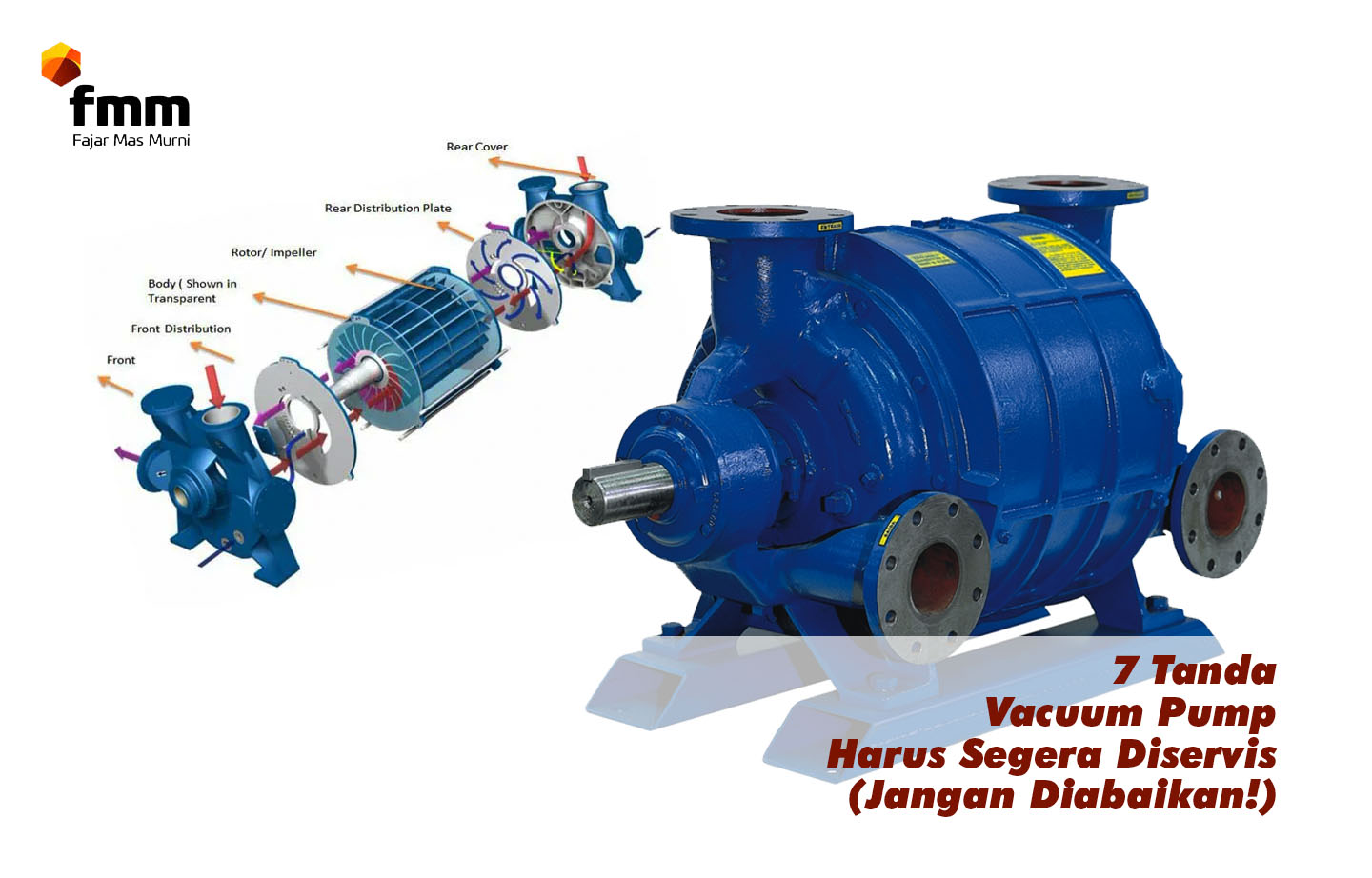
Di banyak fasilitas industri, vacuum pump (pompa vakum) adalah komponen yang sering terlupakan, berjalan di sudut ruangan tanpa banyak diperhatikan, sampai suatu hari mesin berhenti total dan seluruh lini produksi ikut terhenti.
Kenyataannya, hampir semua kerusakan besar pada vacuum pump didahului oleh gejala-gejala peringatan yang bisa dideteksi lebih awal. Masalahnya, gejala ini sering diabaikan atau dianggap normal, sampai akhirnya terlambat.
Dalam banyak kasus industri, biaya emergency repair dan downtime dapat jauh lebih besar dibanding preventive maintenance. Lalu apa saja tanda-tanda yang menunjukan vacuum pump sudah harus diservis sebelum kerusakan tersebut benar-benar terjadi? Berikut penjelasan lengkapnya.
7 Tanda Vacuum Pump Harus Segera Diservis
Tanda #1: Suara yang Tidak Normal
Vacuum pump yang sehat beroperasi dengan suara yang konsisten dan relatif halus. Jika Anda mulai mendengar suara-suara berikut, itu adalah tanda peringatan yang tidak boleh diabaikan:
- Ketukan atau benturan (knocking sound), bisa mengindikasikan bearing yang aus atau komponen internal yang longgar
- Suara gesekan atau decitan, tanda seal atau vane (sudu) yang sudah aus
- Suara berdesis yang tidak biasa, kemungkinan ada kebocoran pada sistem
- Getaran berlebih yang terasa pada body pompa, tanda rotor tidak seimbang atau bearing rusak
Tindakan: Hentikan operasi sesegera mungkin dan panggil teknisi untuk inspeksi. Melanjutkan operasi dengan suara tidak normal berisiko menyebabkan kerusakan yang lebih parah dan biaya perbaikan yang jauh lebih tinggi.
Tanda #2: Tingkat Vakum Tidak Mencapai Spesifikasi
Setiap vacuum pump dirancang untuk mencapai tingkat vakum sesuai spesifikasi pabrikan. Nilai tersebut dapat dinyatakan dalam satuan gauge pressure (misalnya -0,9 barg) atau absolute pressure (misalnya 100 mbar(a)), tergantung jenis pompa dan aplikasinya. Jika vacuum pump secara konsisten tidak mampu mencapai atau mempertahankan tingkat vakum sesuai spesifikasi, kondisi ini mengindikasikan adanya penurunan performa yang perlu segera diinvestigasi.
Penyebab umum penurunan tingkat vakum antara lain: seal yang bocor, vane yang aus (pada rotary vane vacuum pump), liquid ring yang tidak optimal (pada liquid ring vacuum pump), atau adanya kebocoran pada sistem pipa.
Dampaknya langsung terasa pada proses: kecepatan proses melambat, kualitas produk menurun, atau proses tidak bisa berjalan sama sekali.
Tanda #3: Suhu Operasi Melebihi Batas Normal
Setiap vacuum pump memiliki rentang suhu operasi normal. Kenaikan suhu yang persisten di atas batas normal adalah tanda peringatan penting.
- Pada liquid ring vacuum pump: suhu service liquid yang terlalu tinggi mengurangi kapasitas pompa dan mempercepat keausan
- Pada rotary vane vacuum pump: suhu berlebih mengindikasikan pelumasan yang tidak memadai atau vane yang mulai rusak
- Pada dry vacuum pump: overheating dapat merusak komponen internal, termasuk coating pada tipe tertentu
Selalu monitor suhu operasi melalui panel kontrol atau termometer eksternal, dan catat trendnya secara berkala.
Tanda #4: Konsumsi Daya Listrik Meningkat Signifikan
Jika tagihan listrik naik atau meter daya menunjukkan konsumsi yang lebih tinggi tanpa perubahan beban produksi, vacuum pump Anda mungkin bekerja lebih keras dari seharusnya.
Peningkatan konsumsi daya bisa disebabkan oleh seal yang aus (pompa harus bekerja lebih keras untuk mencapai vakum yang sama), bearing yang rusak (menambah gesekan mekanis), atau kontaminan yang menyumbat jalur aliran gas.
Bandingkan data konsumsi daya saat ini dengan data historis atau spesifikasi pabrikan. Peningkatan konsumsi daya yang signifikan dibanding data historis perlu segera diinvestigasi.
Tanda #5: Kebocoran Cairan atau Gas dari Seal
Jika Anda menemukan genangan cairan di sekitar vacuum pump atau bisa mencium bau gas yang tidak biasa, ini adalah tanda seal pompa sudah bocor dan harus segera diganti.
- Kebocoran shaft seal: cairan pelumas atau service liquid merembes dari area poros
- Kebocoran gasket: udara atau gas proses masuk ke sistem, menurunkan efisiensi vakum
- Kebocoran pada liquid ring vacuum pump: service liquid bocor keluar, mengurangi efisiensi dan berpotensi mencemari lingkungan
Jangan abaikan kebocoran sekecil apapun. Kebocoran yang kecil akan semakin membesar seiring waktu dan bisa menyebabkan kegagalan total pada waktu yang paling tidak tepat.
Tanda #6: Waktu Start-up yang Lebih Lama dari Biasanya
Vacuum pump yang sehat mencapai level vakum target dalam waktu yang relatif konsisten setelah dinyalakan. Jika Anda memperhatikan bahwa waktu yang dibutuhkan untuk mencapai level vakum operasional semakin lama dari waktu ke waktu, ini mengindikasikan penurunan performa yang progresif.
Penyebab paling umum adalah: vane yang aus dan tidak lagi melakukan seal dengan baik, ring liquid yang tidak optimal karena suhu atau kualitas cairan, atau komponen internal yang mulai aus secara bertahap.
Tanda #7: Alarm Kontroler Menyala Berulang Kali
Vacuum pump modern dilengkapi dengan sistem monitoring dan alarm yang dirancang untuk mendeteksi kondisi operasi yang tidak normal. Jika alarm menyala sesekali lalu hilang sendiri, itu mungkin normal. Namun jika alarm muncul berulang kali untuk kondisi yang sama, ini adalah sinyal serius yang harus ditangani.
Catat alarm apa saja yang muncul, kapan terjadinya, dan kondisi operasi saat alarm terjadi. Informasi ini sangat berguna bagi teknisi dalam melakukan diagnosis.
Perawatan preventif vacuum pump idealnya dilakukan secara bertahap, mulai dari pengecekan harian terhadap suara operasi, suhu, tingkat vacuum dan kondisi kebocoran. Dilanjut pemeriksaan mingguan pada level service liquid (liquid ring), kualitas oli (rotary vane), dan kondisi filter. Juga perawatan bulanan berupa bersihkan strainer dan filter, periksa coupling dan alignment, serta inspeksi visual visual pada seal dengan tetap meyesuaikan interval perawatan pada rekomendasi pabrikan dan kondisi operasi di lapangan.
Sebagai distributor resmi NASH, merek vacuum pump yang teruji sejak 1905, PT Fajar Mas Murni menyediakan unit original bergaransi, tim teknisi bersertifikat pabrikan, layanan inspeksi di lokasi, suku cadang original, hingga program Preventive Maintenance Contract (PMC) untuk menjaga performa pompa vakum dalam jangka panjang.
Vacuum pump yang terawat dengan baik akan bekerja tanpa gangguan selama bertahun-tahun. Kenali tujuh tanda kerusakan sejak dini, suara tidak normal, vakum tidak tercapai, suhu berlebih, konsumsi listrik meningkat, kebocoran, start-up lambat, dan alarm berulang, lalu segera ambil tindakan, karena biaya perawatan preventif selalu jauh lebih kecil dibanding biaya perbaikan darurat dan kerugian downtime produksi.
Jadwalkan inspeksi vacuum pump Anda sekarang bersama tim teknisi bersertifikat PT Fajar Mas Murni, hubungi kami untuk kunjungan teknisi atau konsultasi gratis.
Telepon: (+62) 21-820-3989
WhatsApp: 0813-1421-2320
Email: marketing@fajarmasmurni.com
Website: www.fajarmasmurni.com

Administrator System
