Mengenal Boil-Off Gas (BOG) pada Industri LNG dan Cara Kerja Kompresor Pengendalinya
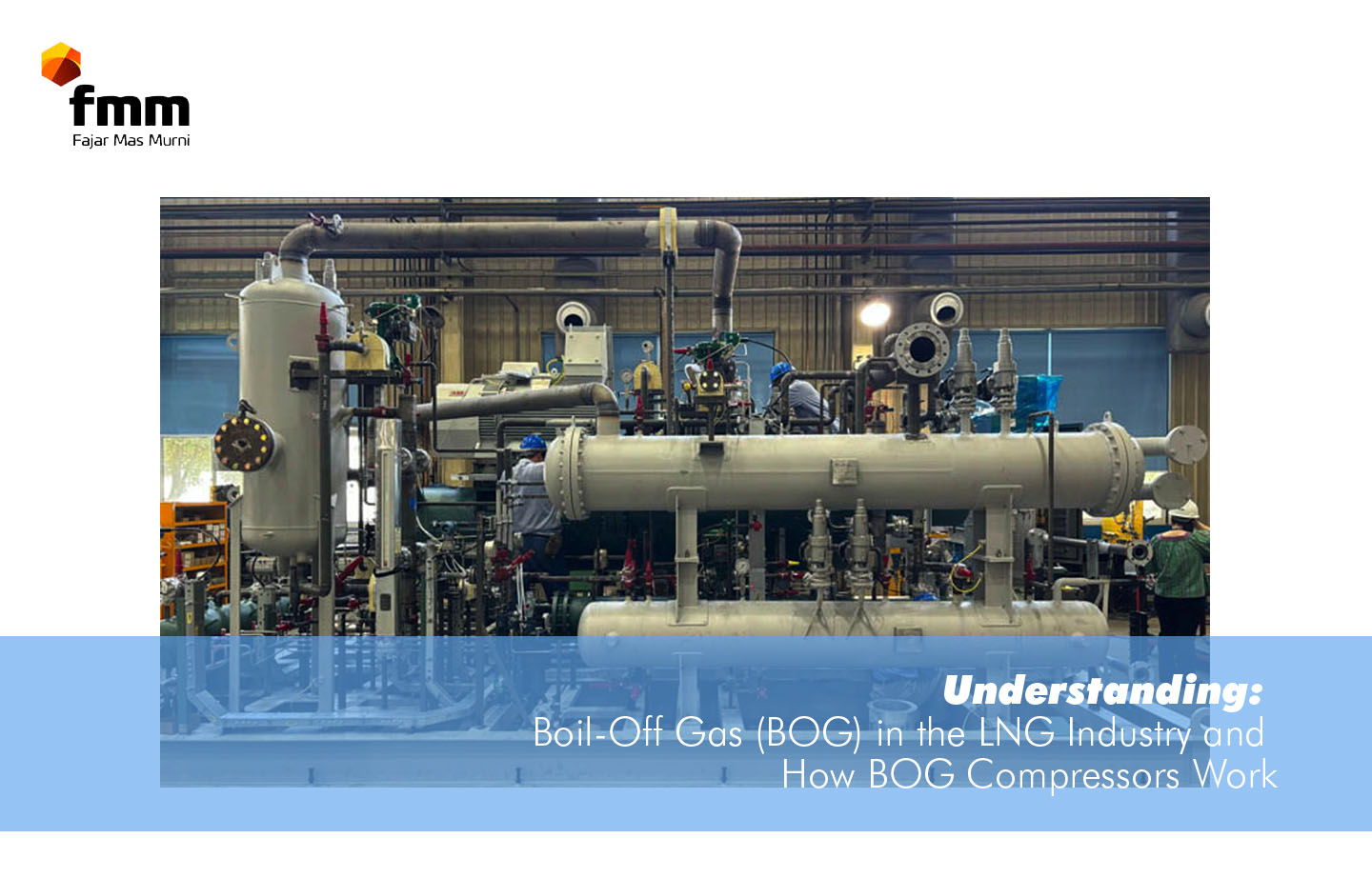
Liquefied Natural Gas (LNG) adalah gas alam yang didinginkan hingga sekitar -162°C sampai berubah menjadi cair. Dalam wujud cair, volumenya menyusut hingga sekitar 1/600 dari volume gasnya. Karena itu LNG jauh lebih efisien untuk disimpan dan dikirim lintas pulau maupun lintas negara. Namun sebaik apa pun insulasi tangki penyimpanannya, panas dari lingkungan tetap akan masuk sedikit demi sedikit.
Panas yang masuk inilah yang membuat sebagian LNG menguap kembali menjadi gas. Uap ini disebut boil-off gas (BOG). Jika tidak dikelola, BOG akan terus menaikkan tekanan di dalam tangki. Di sinilah kompresor BOG berperan penting: menjaga tekanan tetap aman sekaligus mengubah gas yang "hilang" menjadi sesuatu yang bernilai.
Apa Itu Boil-Off Gas (BOG)?
Boil-off gas adalah gas alam, sebagian besar metana, yang terbentuk ketika LNG menguap akibat tambahan energi panas. Fenomena ini tidak bisa dihilangkan sepenuhnya, hanya bisa diminimalkan dan dikendalikan. Karena itu setiap fasilitas LNG, mulai dari kilang, terminal penerima, Floating Storage Regasification Unit (FSRU), hingga kapal pengangkut LNG, selalu dirancang lengkap dengan sistem penanganan BOG.
Besarnya BOG biasanya dinyatakan sebagai boil-off rate, yaitu persentase volume LNG yang menguap per hari. Nilainya bergantung pada kualitas insulasi, ukuran tangki, dan kondisi operasi.
Apa Saja Penyebab Terbentuknya BOG?
Sumber Panas dari Luar dan dari Proses
- Heat ingress: panas dari udara sekitar dan radiasi matahari yang menembus dinding serta insulasi tangki.
- Energi dari pompa: pompa LNG di dalam tangki menambahkan energi ke cairan yang dipompanya.
- Proses loading dan unloading: saat LNG dipindahkan dari kapal ke tangki atau sebaliknya, terjadi pemindahan uap (vapour displacement) serta penguapan tambahan pada pipa dan lengan muat.
- Perubahan tekanan: penurunan tekanan tangki membuat LNG lebih mudah menguap (flash).
- Perbedaan komposisi LNG: LNG dengan densitas berbeda yang dicampur dalam satu tangki dapat memicu stratifikasi. Pada kondisi ekstrem hal ini dapat menyebabkan rollover, yaitu pelepasan uap dalam jumlah besar secara tiba-tiba.
Mengapa BOG Harus Dikendalikan?
Keselamatan. Tangki LNG punya batas tekanan desain. Penumpukan BOG tanpa pengendalian memaksa katup pengaman membuang gas ke flare atau atmosfer.
Nilai ekonomi. BOG adalah gas alam yang sama bernilainya dengan produk. Membakarnya di flare berarti membuang energi dan uang.
Emisi. Metana adalah gas rumah kaca yang kuat. Regulasi emisi yang makin ketat mendorong operator memanfaatkan BOG, bukan membuangnya.
Pilihan Penanganan BOG
Setelah BOG dikumpulkan dari tangki, ada beberapa jalur pemanfaatannya:
- Bahan bakar (fuel gas): dipakai untuk pembangkit listrik di terminal, boiler, atau mesin penggerak kapal LNG.
- Recondenser: di terminal regasifikasi, BOG dikompresi lalu dicairkan kembali dengan mencampurnya ke aliran LNG dingin.
- Reliquefaction: BOG dicairkan ulang melalui siklus refrigerasi lalu dikembalikan ke tangki.
- Send-out ke pipa: BOG dikompresi hingga tekanan jaringan pipa gas lalu disalurkan ke pengguna.
- Flare: hanya sebagai opsi terakhir saat kondisi darurat atau gangguan sistem.
Hampir semua jalur di atas punya satu kesamaan: BOG harus dinaikkan tekanannya terlebih dahulu. Karena itulah kompresor menjadi jantung sistem penanganan BOG.
Cara Kerja Kompresor BOG
Secara prinsip, kompresor BOG menghisap uap bertekanan rendah dari ruang uap tangki, lalu memampatkannya hingga tekanan yang dibutuhkan proses berikutnya. Sistem kontrol kemudian mengatur kapasitas kompresor agar tekanan tangki tetap stabil, karena jumlah BOG berubah-ubah sepanjang hari, apalagi saat proses loading.
Jenis Kompresor yang Umum Digunakan
|
Jenis Kompresor |
Karakteristik |
Contoh Aplikasi |
|
Reciprocating (piston) |
Mampu mencapai tekanan tinggi, cocok untuk laju alir kecil hingga menengah |
Fuel gas bertekanan tinggi untuk mesin kapal, send-out ke pipa |
|
Centrifugal |
Kapasitas aliran sangat besar dengan operasi kontinu |
Terminal LNG skala besar, kapal LNG |
|
Rotary screw (oil-injected) |
Aliran kontinu, rentang kapasitas fleksibel, perawatan relatif sederhana |
Fuel gas, terminal skala kecil-menengah, pemulihan uap (vapour recovery) |
Cara Kerja Kompresor Screw untuk BOG
Kompresor screw menggunakan dua rotor berulir, yaitu male rotor dan female rotor, yang berputar saling mengunci. Prosesnya berlangsung dalam tiga tahap:
- Suction: gas masuk ke rongga di antara ulir rotor saat rongga tersebut terbuka ke sisi hisap.
- Kompresi: rotor terus berputar sehingga rongga yang berisi gas menyempit dan tekanan gas naik.
- Discharge: gas bertekanan keluar melalui port buang menuju proses selanjutnya.
Pada tipe oil-injected, oli disuntikkan ke ruang kompresi untuk mendinginkan gas, merapatkan celah antar rotor, dan melumasi bantalan. Oli kemudian dipisahkan kembali dari gas melalui oil separator bertingkat agar gas yang dikirim tetap bersih. Kapasitas dapat diatur dengan slide valve atau variable speed drive (VSD) sehingga kompresor bisa mengikuti fluktuasi jumlah BOG.
Hal Penting dalam Memilih Kompresor BOG
- Suhu dan komposisi gas masuk: BOG bisa sangat dingin dan mengandung nitrogen. Material dan desain kompresor, termasuk kebutuhan pemanas atau penukar panas di sisi hisap, harus sesuai.
- Rentang kapasitas (turndown): jumlah BOG saat operasi normal dan saat loading bisa berbeda jauh.
- Tekanan buang yang dibutuhkan: menentukan jumlah tahap kompresi dan jenis kompresor.
- Area berbahaya: paket kompresor harus memenuhi persyaratan area berbahaya (misalnya ATEX atau IECEx).
- Keandalan dan redundansi: banyak fasilitas memakai konfigurasi cadangan (misalnya 2 x 100%) agar penanganan BOG tidak terhenti.
Ingersoll Rand, melalui divisi Engineered Project Solutions, menyediakan paket screw gas compressor yang dirancang sesuai spesifikasi proyek. Aplikasinya mencakup LNG boil-off gas, vapour recovery, flare gas capture, dan fuel gas conditioning.
Kesimpulan
Boil-off gas adalah konsekuensi alami dari penyimpanan LNG yang tidak bisa dihindari, tetapi bisa dikendalikan. Dengan kompresor BOG yang tepat, operator dapat menjaga tekanan tangki tetap aman, mengurangi flaring dan emisi metana, sekaligus memanfaatkan kembali gas yang bernilai sebagai bahan bakar atau produk.
Sebagai distributor resmi Ingersoll Rand di Indonesia, FMM siap membantu Anda meninjau kebutuhan penanganan BOG di fasilitas Anda dan merekomendasikan konfigurasi gas compressor yang sesuai dengan kondisi operasi, standar keselamatan, dan target efisiensi proyek.

Administrator System
