Cara Merawat Kompresor Udara agar Tahan Lama dan Hemat Energi
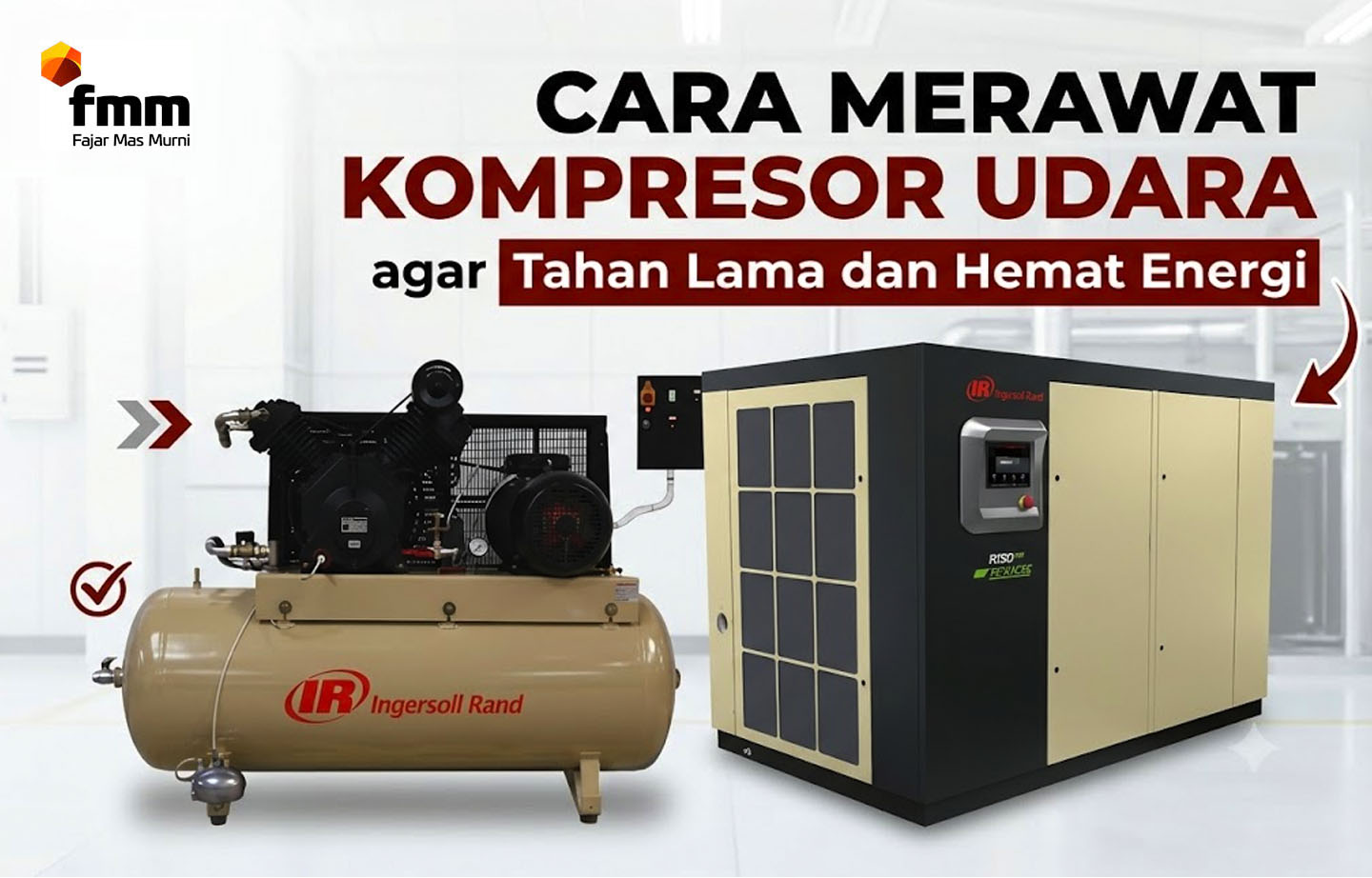
Sistem kompresor udara (air compressor) adalah salah satu konsumen energi terbesar di fasilitas industri. Riset menunjukkan bahwa compressed air systems menyumbang 20 hingga 30 persen dari total tagihan listrik sebuah pabrik manufaktur. Dengan angka sebesar itu, keandalan dan efisiensi kompresor udara secara langsung mempengaruhi profitabilitas bisnis Anda.
Masalahnya, banyak fasilitas industri yang menganggap kompresor udara sebagai aset yang bisa dibiarkan berjalan tanpa perhatian, sampai akhirnya terjadi kerusakan mendadak yang menghentikan seluruh lini produksi. Perawatan preventif yang konsisten dapat memperpanjang umur pakai kompresor secara signifikan.
8 Langkah Kritis Cara Merawat Kompresor Udara
Selain jadwal rutin, ada delapan langkah kritis yang menentukan umur panjang kompresor udara Anda:
1. Selalu Gunakan Pelumas yang Direkomendasikan
Setiap merek dan tipe kompresor udara memiliki spesifikasi oli yang berbeda. Menggunakan oli yang tidak sesuai bisa merusak seal, mempercepat oksidasi, dan menurunkan efisiensi pelumasan secara drastis. Selalu gunakan oli yang direkomendasikan oleh pabrikan, untuk Ingersoll Rand, gunakan produk seri Ultra Coolant atau sesuai rekomendasi manual mesin.
2. Jangan Abaikan Kondensat
Kompresi udara menghasilkan kondensasi air yang signifikan. Jika kondensat tidak di-drain secara rutin, air akan merusak komponen internal, mencemari produk akhir, dan mempercepat korosi pada pipa. Pasang auto-drain yang berfungsi baik dan periksa kondisinya secara rutin.
3. Jaga Suhu Ruang Kompresor
Kompresor udara bekerja paling efisien pada suhu udara masuk yang sejuk. Pastikan ruang kompresor memiliki ventilasi yang memadai. Kenaikan temperatur udara masuk dapat menurunkan efisiensi kompresos dan meningkatkan konsumsi energi.
4. Perbaiki Kebocoran Sesegera Mungkin
Kebocoran pipa adalah pembuang energi yang paling sering diabaikan. Sebuah lubang kebocoran berdiameter 1 milimeter pada tekanan 7 bar dapat membuang udara sekitar 1,5 liter per detik, setara dengan ratusan ribu rupiah tagihan listrik per tahun. Lakukan leak detection secara berkala menggunakan ultrasonic leak detector.
5. Monitor Data Operasional secara Konsisten
Kompresor udara modern seperti Ingersoll Rand Nirvana dilengkapi controller iR5500 yang merekam data operasional secara detail. Manfaatkan data ini, tren perubahan suhu, tekanan, atau konsumsi energi sering kali menjadi indikator awal sebelum kerusakan terjadi.
6. Latih Operator dengan Benar
Perawatan terbaik tidak akan efektif jika operator tidak memahami cara mengoperasikan kompresor dengan benar. Pastikan semua operator terlatih untuk mengenali kondisi operasi normal dan tahu apa yang harus dilakukan ketika terjadi alarm atau kondisi tidak normal.
7. Terapkan Jadwal Rutin secara Disiplin
Langkah-langkah di atas akan efektif apabila dijalankan sesuai jadwal yang konsisten, bukan sekadar dilakukan sesekali ketika muncul tanda-tanda anomali pada kompresor. Buat formulir ceklist pemeriksaan dengan menerapkan perawatan harian (cek tekanan, drain kondensat, monitor suhu dan suara), perawatan mingguan (bersihkan filter, cek kebocoran dan belt), perawatan bulanan (bersihkan cooler, cek katup dan koneksi listrik), hingga perawatan tahunan (ganti oli lengkap, overhaul airend, kalibrasi sistem).
8. Jadwalkan Servis dengan Teknisi Bersertifikat
Untuk perawatan mendalam seperti overhaul airend dan kalibrasi sistem, selalu gunakan teknisi yang bersertifikat dan memiliki pengalaman dengan merek kompresor yang Anda gunakan. Servis yang dilakukan oleh teknisi tidak terlatih dapat membatalkan garansi dan berpotensi merusak komponen yang masih baik.
Tanda-Tanda Kompresor Udara Membutuhkan Servis Segera
Kenali tanda-tanda berikut sebagai sinyal bahwa kompresor udara Anda membutuhkan perhatian segera:
• Suara operasi berubah: ada ketukan, gesekan, atau getaran yang tidak biasa
• Tekanan tidak mencapai set point atau tidak stabil
• Suhu operasi secara konsisten lebih tinggi dari biasanya
• Konsumsi listrik meningkat tanpa perubahan beban produksi
• Ada rembesan oli atau air yang tidak normal di sekitar mesin
• Waktu loading cycle lebih panjang dari biasanya
• Alarm controller menyala berulang kali
Tips Hemat Energi dari Sistem Kompresor Udara
Perawatan kompresor udara yang baik tidak hanya memperpanjang umur mesin, tapi juga berdampak langsung pada efisiensi energi:
• Atur pressure set point serendah mungkin sesuai kebutuhan proses, setiap penurunan 1 bar tekanan menghemat energi sekitar 7 persen
• Gunakan kompresor dengan Variable Speed Drive (VSD) seperti Ingersoll Rand Nirvana untuk kebutuhan udara yang berfluktuasi, bisa hemat hingga 35 persen dibanding fixed speed
• Implementasikan heat recovery system, panas buang kompresor bisa dimanfaatkan untuk memanaskan air atau ruangan
• Pisahkan zona tekanan berbeda, jangan supply semua alat dengan tekanan tertinggi jika sebagian hanya butuh tekanan rendah
• Matikan kompresor atau alihkan ke unload mode saat periode produksi rendah
Pada akhirnya, kompresor udara yang dirawat dengan rutin akan terus bekerja optimal selama bertahun-tahun, membuat investasi kecil ini membuat lancar operasional perusahaan dan bebas masalah dikemudian hari.
PT Fajar Mas Murni menyediakan program Preventive Maintenance Service untuk kompresor udara Ingersoll Rand dan berbagai merek lainnya. Tim teknisi bersertifikat kami siap membantu Anda merancang jadwal perawatan yang optimal sesuai kondisi operasional fasilitas Anda.
Hubungi tim engineer PT Fajar Mas Murni untuk konsultasi tentang program perawatan kompresor udara yang tepat untuk fasilitas Anda.
Telepon: (+62) 21-820-3989
WhatsApp: 0813-1421-2320
Email: marketing@fajarmasmurni.com
Website: www.fajarmasmurni.com

Administrator System
