Melihat Lebih Detail dengan Hitachi TM4000 II & TM4000Plus II
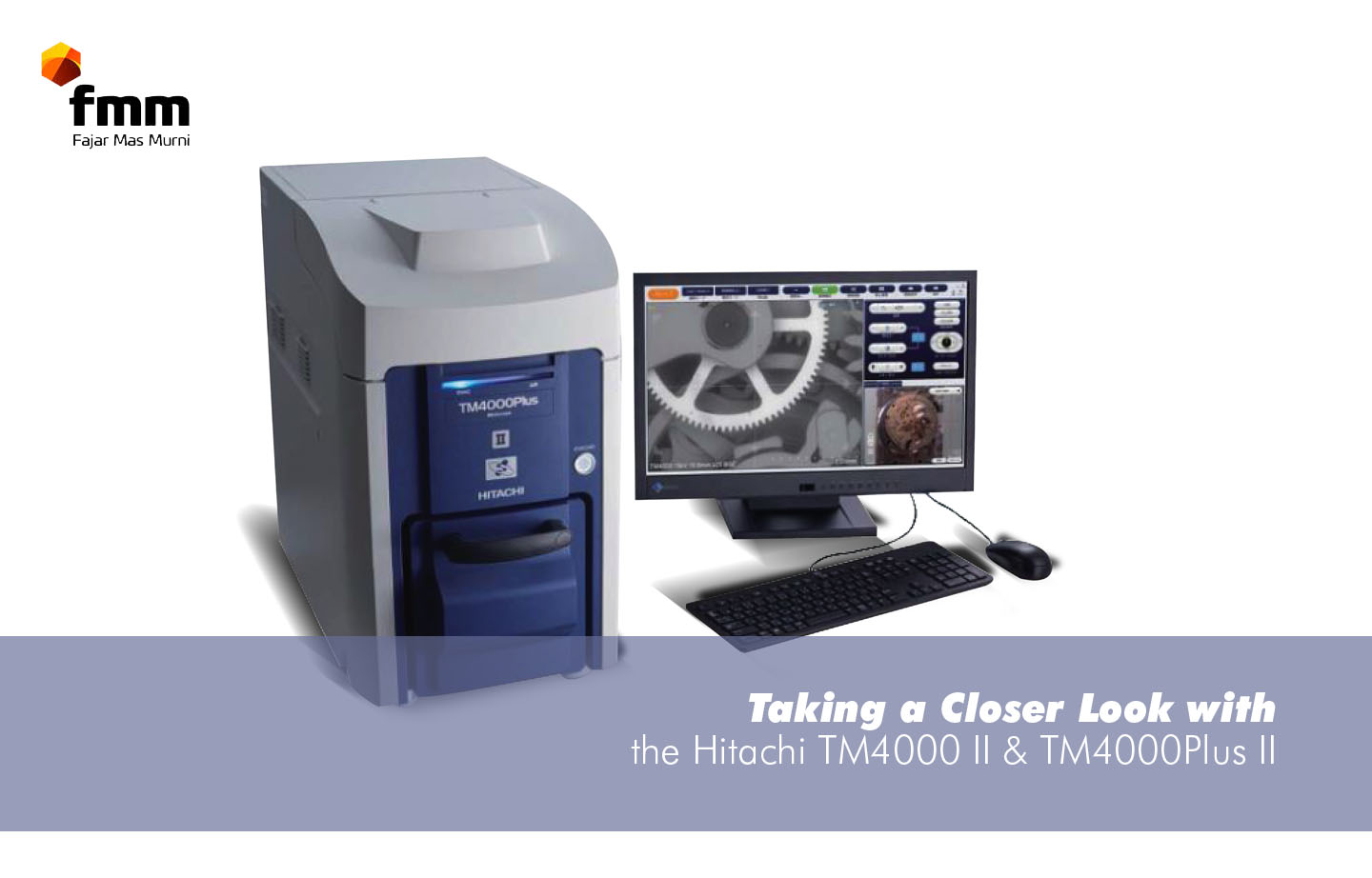
Di tengah kebutuhan industri dan penelitian yang semakin menuntut detail, akurasi, dan kecepatan, kemampuan pencitraan bukan lagi sekadar menghasilkan gambar. Bagi laboratorium modern, sebuah sistem pencitraan juga dituntut mampu memberikan hasil yang tajam, mudah dioperasikan, serta fleksibel digunakan untuk berbagai jenis sampel.
Tantangannya menjadi semakin besar ketika sampel yang diamati memiliki karakteristik berbeda. Sampel konduktif mungkin relatif mudah diamati, tetapi bagaimana dengan material non-konduktif atau bahkan sampel yang terhidrasi? Di sinilah Scanning Electron Microscope (SEM) memiliki peran penting.
SEM memungkinkan pengguna memperoleh citra permukaan sampel dengan detail dan ketajaman yang tinggi. Tidak hanya digunakan dalam laboratorium klinis maupun penelitian, teknologi SEM juga memiliki peran penting dalam berbagai aplikasi industri, mulai dari karakterisasi material hingga analisis permukaan. Namun, teknologi canggih tidak selalu harus identik dengan pengoperasian yang rumit.
Ketika Teknologi SEM Menjadi Lebih Sederhana
Memahami kebutuhan tersebut, PT Fajar Mas Murni (FMM) menghadirkan Hitachi TM4000 II dan TM4000Plus II, generasi terbaru dari Tabletop Microscope (TM) Series Hitachi. Dirancang dengan tetap mempertahankan konsep compact dan praktis, seri TM4000 mengintegrasikan kemudahan pengoperasian, pencitraan yang optimal, serta kualitas gambar yang tinggi dalam sebuah platform mikroskop meja. Dengan pendekatan tersebut, pengguna tidak perlu memilih antara kualitas gambar dan kemudahan penggunaan.
Hitachi TM4000 II dan TM4000Plus II menghadirkan keduanya dalam satu solusi pencitraan
Menghasilkan Gambar Berkualitas dengan Proses yang Lebih Sederhana
Salah satu keunggulan seri TM4000 adalah bagaimana teknologi canggih dikemas dalam alur kerja yang intuitif.
- Otomatisasi untuk Pengamatan dan Analisis Elemental; Berbagai proses pengamatan dan analisis dapat dilakukan dengan langkah yang lebih sederhana. Pengguna dapat berpindah dan mengatur gambar dengan mudah sehingga proses observasi menjadi lebih efisien.
- Navigasi Area Pengamatan yang Lebih Intuitif; Melalui Camera Navi, pengguna dapat memanfaatkan gambar optik untuk menemukan dan menavigasi area sampel yang ingin diamati. Bahkan, gambar SEM yang diperoleh dapat dilapiskan pada SEM MAP, sehingga membantu pengguna menentukan lokasi pengamatan secara lebih mudah
Mengamati Sampel Non-Konduktif Tanpa Proses yang Rumit
Salah satu tantangan dalam pengamatan SEM adalah karakteristik sampel. Tidak semua sampel memiliki sifat konduktif. Pada kondisi tertentu, sampel non-konduktif maupun sampel terhidrasi dapat menjadi tantangan tersendiri dalam proses pencitraan.
TM4000Plus II dirancang untuk memberikan fleksibilitas yang lebih luas
Dengan kondisi under low vacuum, pengguna dapat melakukan pengamatan terhadap berbagai material, termasuk sampel non-konduktif seperti partikel toner tinta dan permukaan daun yang terhidrasi, tanpa harus selalu melakukan preparasi sampel yang kompleks. Fitur charge reduction mode juga memungkinkan pengurangan charging pada sampel hanya dengan satu klik. Dan hasilnya lebih banyak jenis sampel dapat diamati dengan workflow yang lebih sederhana.
Detail Permukaan Tetap Terjaga pada Kondisi Low Vacuum
TM4000Plus II dilengkapi dengan innovative secondary electron detector yang memungkinkan pengguna memperoleh detail permukaan pada sampel non-konduktif dalam kondisi vakum yang lebih rendah. Salah satunya melalui Ultra Variable-pressure Detector (UVD) Hitachi. UVD menghasilkan citra elektron sekunder dengan mendeteksi cahaya tampak yang tereksitasi melalui interaksi elektron dengan gas. Teknologi ini membantu memberikan informasi permukaan yang lebih detail sekaligus memperluas kemampuan pengamatan pada kondisi low vacuum.
Dukungan Tegangan Akselerasi Hingga 20 kV
Untuk kebutuhan analisis yang lebih lanjut, TM4000Plus II juga menawarkan tegangan akselerasi hingga 20 kV. Tegangan akselerasi yang tinggi memungkinkan proses EDS analysis dilakukan dengan lebih cepat. Sebagai gambaran, data EDS mapping pada 20 kV dapat diperoleh dalam waktu sekitar 2 menit, memberikan dukungan bagi pengguna yang membutuhkan informasi elemental secara lebih efisien.
Perlu Resolusi Lebih Tinggi? Ada Multi Zigzag
Untuk kebutuhan pencitraan dengan pembesaran tinggi, tersedia fitur Multi Zigzag sebagai opsi. Fungsi ini mengambil beberapa gambar pada pembesaran tinggi kemudian menggabungkannya menjadi satu gambar dengan resolusi tinggi. Dengan demikian, pengguna dapat memperoleh representasi area pengamatan yang lebih luas dengan tetap mempertahankan detail gambar yang diperlukan.
Untuk Sampel Tipis dan Biologis
Kebutuhan penelitian tidak selalu berhenti pada pengamatan permukaan. Untuk aplikasi yang membutuhkan pengamatan sampel tipis, STEM Holder sebagai opsi memungkinkan pengguna memperoleh gambar transmisi dengan memanfaatkan Hitachi UVD. Fitur ini membuka peluang pengamatan terhadap sampel tipis maupun sampel biologis, sehingga memperluas fleksibilitas penggunaan TM4000Plus II dalam berbagai kebutuhan penelitian dan laboratorium.
Satu Platform, Beragam Kebutuhan Pencitraan
Dari karakterisasi material hingga sampel biologis, dari pengamatan permukaan hingga analisis elemental, Hitachi TM4000 II dan TM4000Plus II menawarkan pendekatan yang lebih praktis terhadap kebutuhan pencitraan modern. Bukan hanya tentang mendapatkan gambar yang lebih detail. Tetapi tentang bagaimana teknologi pencitraan dapat membantu pengguna bekerja lebih mudah, mengamati lebih banyak jenis sampel, dan memperoleh informasi yang dibutuhkan secara lebih efisien. Dan ketika teknologi tersebut hadir dalam desain tabletop yang compact, SEM menjadi lebih mudah didekatkan dengan kebutuhan laboratorium modern.
Hitachi TM4000 II & TM4000Plus II. Compact in design. Powerful in observation.
Untuk informasi lebih lanjut mengenai Hitachi Tabletop Microscope TM4000 II dan TM4000Plus II, termasuk pilihan konfigurasi dan aplikasinya, silakan menghubungi PT Fajar Mas Murni (FMM). FMM menghadirkan teknologi laboratorium dan solusi industri, sekaligus memberikan dukungan yang dibutuhkan agar teknologi tersebut dapat bekerja optimal bagi pelanggan.

Administrator System
