Perbedaan Fan dan Blower Industri: Mana yang Tepat untuk Kebutuhan Anda?
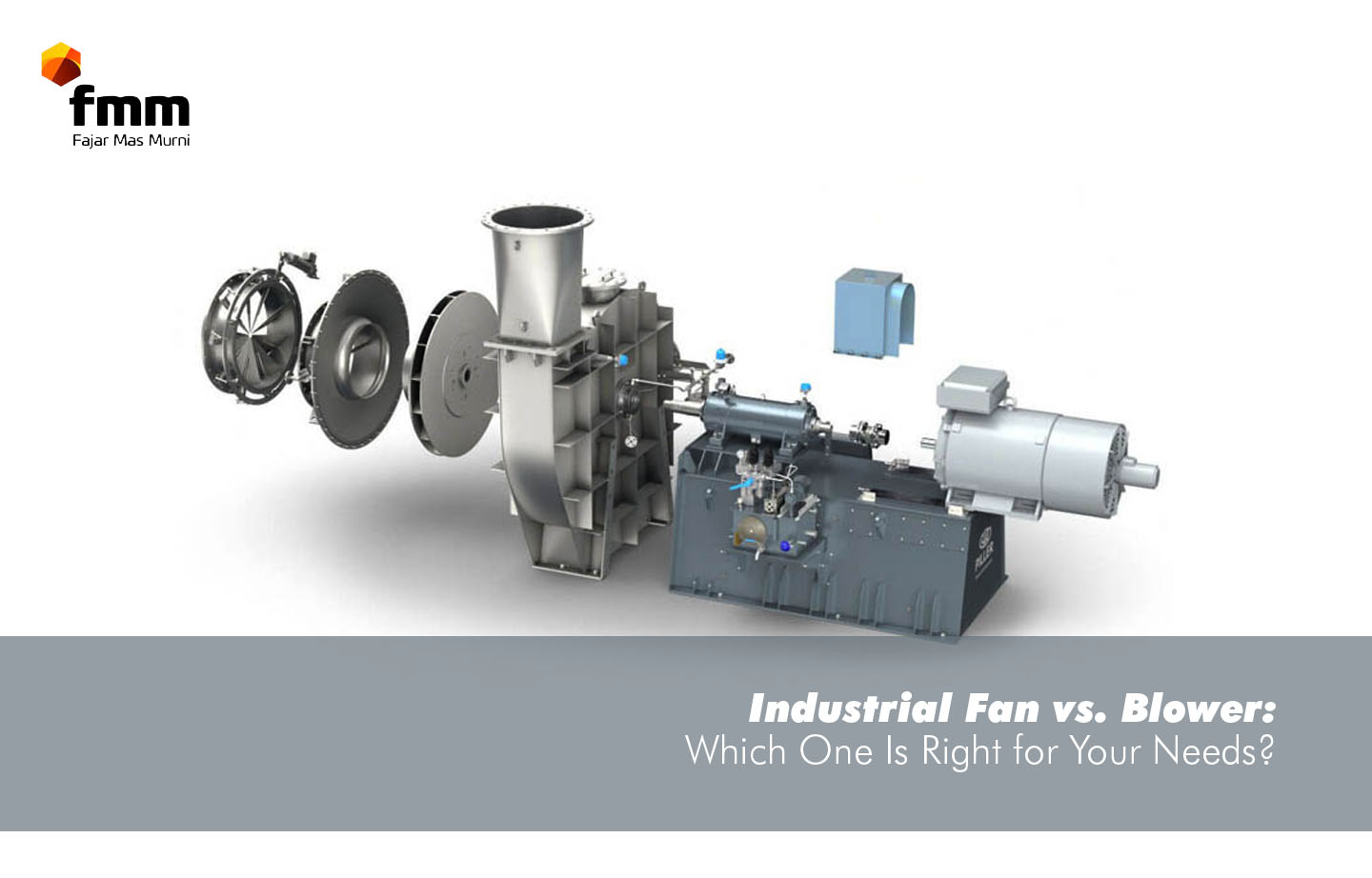
Di banyak fasilitas industri, istilah "fan" dan "blower" masih sering dianggap sama dan dipakai bergantian. Padahal, perbedaan fan dan blower industri cukup mendasar, mulai dari cara kerja, kemampuan tekanan, hingga aplikasinya di lapangan. Kesalahan memilih salah satu dari keduanya bisa berakibat pada sistem yang boros energi, aliran udara yang tidak memadai, atau bahkan kegagalan proses produksi.
Artikel ini mengupas perbedaan fan dan blower secara teknis, sekaligus mengenalkan salah satu jenis blower khusus yang makin banyak dipakai industri modern, yaitu MVR blower.
Apa Itu Fan Industri?
Fan adalah peralatan yang berfungsi memindahkan udara dalam volume besar, namun hanya mampu menghasilkan kenaikan tekanan yang relatif kecil. Prinsip kerjanya mengandalkan putaran bilah (blade) untuk mendorong udara, baik secara aksial (searah sumbu putaran, seperti kipas angin biasa) maupun sentrifugal (memanfaatkan gaya sentrifugal untuk mengarahkan udara tegak lurus terhadap sumbu putaran).
Karena tekanannya rendah, fan umumnya digunakan untuk kebutuhan yang tidak melawan hambatan sistem (system resistance) yang besar, seperti:
- • Sirkulasi dan ventilasi udara ruangan
- • Sistem pendingin (cooling) pada mesin dan panel elektrikal
- • Exhaust system dan pembuangan udara kotor
- • Kebutuhan HVAC skala industri maupun komersial
Apa Itu Blower Industri?
Blower adalah peralatan berkecepatan tinggi, umumnya bertipe sentrifugal atau positive displacement, yang mampu menghasilkan tekanan jauh lebih tinggi dibanding fan sambil tetap mempertahankan laju aliran volume yang besar. Blower dirancang untuk mendorong udara atau gas melawan hambatan sistem yang signifikan, sehingga cocok untuk aplikasi proses, bukan sekadar sirkulasi udara.
Beberapa aplikasi umum blower di industri antara lain:
- • Pneumatic conveying (transportasi material serbuk atau granular menggunakan udara bertekanan)
- • Aerasi pada instalasi pengolahan air limbah (wastewater treatment)
- • Pasokan udara pembakaran pada boiler dan furnace
- • Proses industri yang membutuhkan tekanan negatif (vakum ringan) maupun positif
Perbedaan Fan dan Blower Berdasarkan Rasio Tekanan
Cara paling teknis dan baku untuk membedakan fan, blower, dan kompresor adalah melalui rasio tekanan spesifik, yaitu perbandingan antara tekanan keluar (discharge) dan tekanan masuk (suction). Klasifikasi ini mengacu pada standar yang umum digunakan di kalangan insinyur mekanikal, termasuk American Society of Mechanical Engineers (ASME):
|
Peralatan |
Rasio Tekanan Spesifik |
Karakteristik Umum |
|
Fan |
hingga 1,11 |
Volume aliran besar, kenaikan tekanan rendah |
|
Blower |
1,11 – 1,20 |
Volume aliran besar, kenaikan tekanan menengah-tinggi |
|
Kompresor |
lebih dari 1,20 |
Tekanan sangat tinggi, umumnya volume aliran lebih kecil |
Dari tabel di atas terlihat jelas bahwa blower berada di posisi "tengah" antara fan dan kompresor. Inilah yang membuat blower mampu menangani aplikasi yang terlalu berat untuk fan, namun belum memerlukan kompresor bertekanan tinggi.
Perbedaan dari Segi Desain dan Konstruksi
Selain rasio tekanan, fan dan blower juga berbeda dari sisi konstruksi:
- • Fan umumnya memiliki bilah (impeller) yang lebih besar dan berputar pada kecepatan relatif rendah, karena hanya perlu memindahkan udara, bukan menekannya.
- • Blower sentrifugal memiliki kemiripan konstruksi dengan pompa sentrifugal, sering dilengkapi sistem roda gigi (gearbox) untuk mencapai kecepatan putar tinggi, bahkan bisa melebihi 10.000 rpm. Desain satu tahap (single-stage) menawarkan efisiensi lebih tinggi, sementara desain multi-tahap (multi-stage) memberikan jangkauan aliran udara yang lebih luas pada tekanan yang stabil.
- • Blower positive displacement (misalnya tipe roots atau lobe) bekerja dengan cara "menjebak" volume udara tertentu di setiap putaran dan mendorongnya keluar, sehingga menghasilkan aliran yang relatif konstan meski tekanan sistem berubah.
Mengenal MVR Blower: Solusi Efisiensi Energi untuk Proses Industri
Salah satu jenis blower yang berkembang pesat penggunaannya adalah MVR blower (Mechanical Vapor Recompression). Berbeda dari blower konvensional yang hanya memindahkan udara, MVR blower berfungsi mengompresi ulang uap hasil proses evaporasi sehingga suhu dan energinya meningkat, lalu uap tersebut digunakan kembali sebagai sumber pemanas pada tahap evaporasi berikutnya.
Manfaat utama MVR blower antara lain:
- • Menghemat energi secara signifikan karena mengurangi kebutuhan steam eksternal pada proses evaporasi
- • Menekan biaya operasional pada industri yang banyak melakukan proses pemekatan cairan (concentration)
- • Ramah lingkungan karena menurunkan emisi yang dihasilkan dari pembakaran bahan bakar untuk steam boiler
MVR blower banyak diaplikasikan pada industri pengolahan air limbah, desalinasi, petrokimia, farmasi, hingga makanan dan minuman — khususnya pada proses yang melibatkan pemekatan atau penguapan cairan dalam skala besar.
Kapan Harus Memilih Fan, dan Kapan Memilih Blower?
Sebagai panduan praktis:
- • Pilih fan jika kebutuhan utama Anda adalah memindahkan udara dalam volume besar tanpa harus melawan hambatan sistem yang berarti, misalnya untuk ventilasi, sirkulasi, atau pendinginan.
- • Pilih blower jika sistem Anda memiliki hambatan (ducting panjang, media filter, kedalaman kolam, dan sejenisnya) yang membutuhkan tekanan lebih tinggi agar aliran udara tetap optimal, misalnya pada pneumatic conveying atau aerasi limbah.
- • Pertimbangkan MVR blower secara khusus jika proses Anda melibatkan evaporasi atau pemekatan cairan berulang, karena potensi penghematan energinya jauh lebih besar dibanding blower konvensional.
Aplikasi Fan dan Blower di Berbagai Sektor Industri
Kombinasi fan dan blower dapat ditemukan hampir di seluruh sektor industri, di antaranya:
- • Manufaktur, ventilasi pabrik, pendinginan mesin, dan sistem pneumatic conveying
- • Pertambangan, ventilasi tambang bawah tanah dan sistem pembuangan debu
- • Pengolahan air dan limbah, aerasi kolam biologis menggunakan blower sentrifugal maupun MVR blower
- • Makanan dan minuman serta farmasi, proses pengeringan, evaporasi, dan pengendalian udara ruang produksi
- • Pembangkit listrik dan boiler, pasokan udara pembakaran (forced draft) dan pembuangan gas buang (induced draft)
Memahami perbedaan fan dan blower industri, baik dari rasio tekanan, desain, maupun aplikasinya, adalah langkah awal untuk memastikan sistem udara di fasilitas Anda berjalan efisien dan sesuai kebutuhan proses. Kesalahan pemilihan bukan hanya membuat performa tidak optimal, tetapi juga membuang biaya energi dalam jangka panjang.
Sebagai distributor resmi berbagai solusi fan dan blower industri, termasuk lini MVR blower untuk kebutuhan efisiensi energi, FMM siap membantu Anda menentukan peralatan yang paling sesuai dengan karakteristik proses dan skala operasi bisnis Anda.
Ingin mengetahui seri produk yang paling sesuai untuk aplikasi Anda? Tim FMM siap membantu Anda memilih solusi yang tepat sesuai kebutuhan proses industri. Phone : (+62) 21-820-3989 WhatsApp : 0813-1421-2320 Email : marketing@fajarmasmurni.com Website : www.fajarmasmurni.com

Administrator System
