Peralatan Laboratorium Wajib untuk Riset Modern: Panduan Lengkap
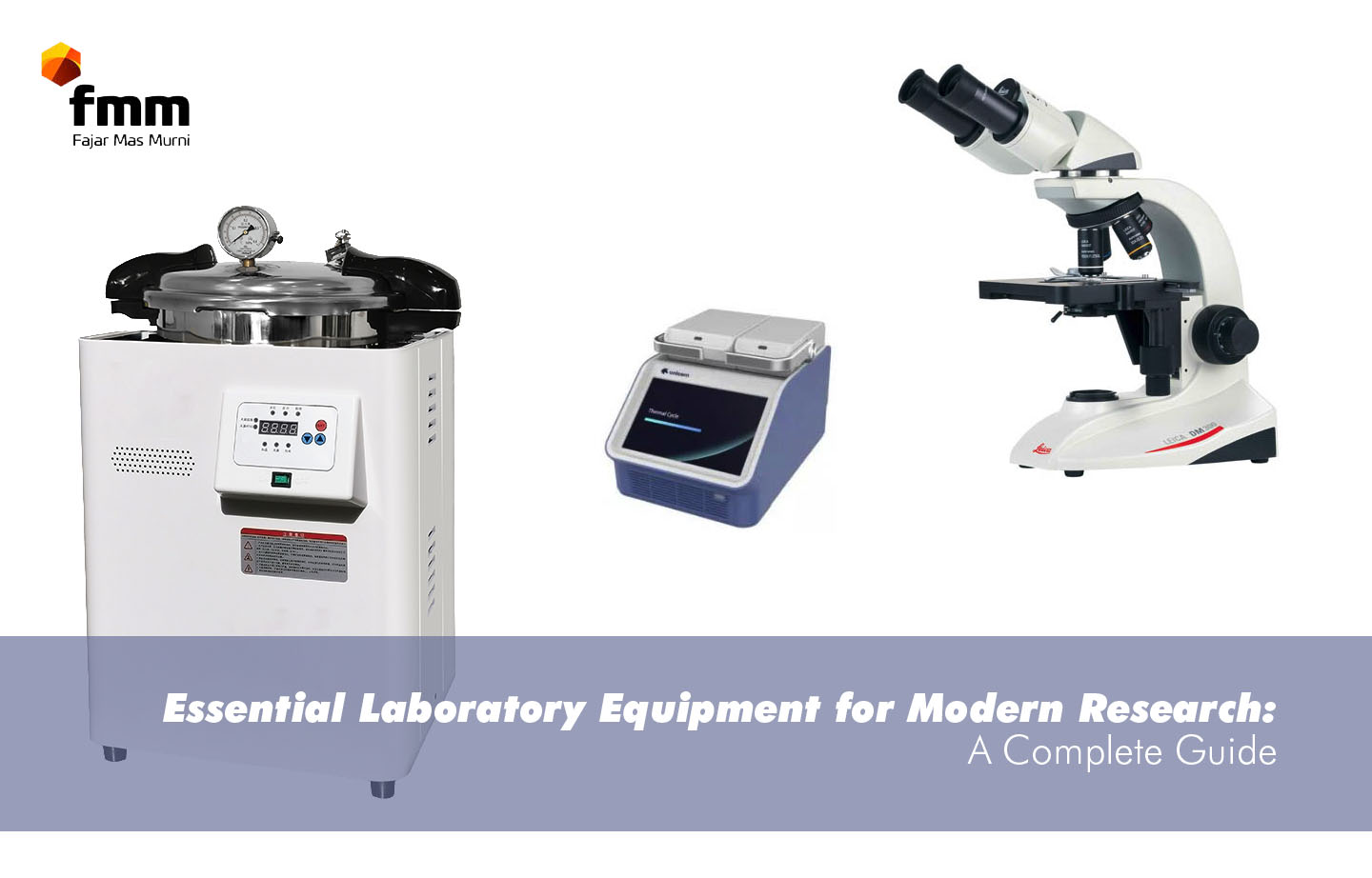
Akurasi sebuah riset tidak hanya ditentukan oleh metode dan keahlian peneliti, tetapi juga oleh kualitas peralatan laboratorium yang digunakan. Sampel yang rusak akibat penyimpanan yang tidak stabil, citra mikroskopis yang kurang tajam, atau hasil analisis komposisi material yang tidak akurat, semuanya bisa membuat sebuah riset kehilangan validitasnya, betapa pun baik desain eksperimennya.
Artikel ini membahas kategori peralatan laboratorium yang wajib ada di fasilitas riset modern, mulai dari penyimpanan sampel bersuhu ultra rendah, sistem pencitraan mikroskopis, hingga instrumen analisis komposisi material tingkat lanjut.
Mengapa Kualitas Peralatan Laboratorium Menentukan Akurasi Riset?
Setiap tahap riset, dari penyimpanan sampel, observasi struktur mikro, hingga analisis komposisi kimiawi, sangat bergantung pada presisi alat yang digunakan. Fluktuasi suhu penyimpanan sekecil apa pun dapat merusak integritas sampel biologis seperti DNA, RNA, atau jaringan. Resolusi mikroskop yang tidak memadai bisa membuat detail struktural penting terlewat. Sementara itu, instrumen analisis yang tidak terkalibrasi dengan baik dapat menghasilkan data komposisi yang menyesatkan.
Karena itu, laboratorium riset modern, baik di bidang life science, material science, maupun industri, perlu memastikan empat kategori peralatan berikut tersedia dan bekerja dengan andal.
Kategori Peralatan Laboratorium yang Wajib Dimiliki
1. Freezer & Cold Storage untuk Penyimpanan Sampel (Arctiko)
Banyak riset di bidang biologi molekuler, genetika, hingga bioteknologi bergantung pada penyimpanan sampel dalam kondisi suhu ultra rendah agar materi genetik, protein, atau jaringan tidak terdegradasi. Di sinilah peran ULT freezer (Ultra Low Temperature freezer) menjadi krusial, dengan kemampuan menjaga suhu hingga -86°C, bahkan sampai -150°C untuk penyimpanan kriogenik jangka panjang.
Arctiko, produsen asal Denmark, dikenal sebagai spesialis freezer dan refrigerator laboratorium, biomedis, serta bank darah. Lini produknya mencakup ULT freezer, freezer kriogenik, refrigerator farmasi, hingga refrigerator bank darah, semuanya dirancang untuk menjaga stabilitas suhu meski pintu sering dibuka-tutup, sehingga sampel berharga seperti DNA/RNA, plasma, vaksin, maupun jaringan tetap terjaga kualitasnya sepanjang masa penyimpanan.
2. Mikroskop & Sistem Pencitraan untuk Observasi Mikro (Leica)
Observasi struktur mikro adalah fondasi dari banyak disiplin riset, mulai dari biologi sel, patologi, metalurgi, hingga kontrol kualitas material. Mikroskop yang presisi, baik jenis optik, stereo, maupun digital, memungkinkan peneliti melihat detail yang tidak kasat mata sekaligus mendokumentasikannya secara akurat untuk keperluan publikasi maupun analisis lanjutan.
Leica Microsystems merupakan salah satu nama besar di bidang mikroskopi dan sistem pencitraan laboratorium, dengan cakupan aplikasi yang luas mulai dari riset akademik, histopatologi, hingga inspeksi material di lingkungan industri.
3. Instrumen Analisis dan Mikroskop Elektron (Hitachi)
Untuk kebutuhan analisis yang lebih mendalam, seperti melihat struktur permukaan material hingga skala nanometer, laboratorium modern memerlukan instrumen analisis tingkat lanjut seperti Scanning Electron Microscope (SEM) dan spektrofotometer.
Hitachi High-Tech dikenal luas sebagai penyedia instrumen analisis dan mikroskop elektron dengan sumber elektron serta detektor canggih yang menghasilkan citra dan data analitis dengan resolusi tinggi. Instrumen semacam ini banyak digunakan pada riset material, semikonduktor, hingga pengembangan produk di sektor farmasi dan elektronik.
4. Sistem Karakterisasi Material EDS/EBSD (EDAX)
Selain melihat bentuk fisik suatu material, peneliti sering kali perlu mengetahui komposisi unsur dan struktur kristalnya secara detail. Kebutuhan ini dipenuhi oleh sistem EDS (Energy Dispersive Spectroscopy) untuk analisis komposisi unsur, dan EBSD (Electron Backscatter Diffraction) untuk analisis orientasi kristal serta mikrostruktur material, keduanya biasanya terintegrasi dengan SEM.
EDAX adalah penyedia global terkemuka untuk sistem EDS/EDX, EBSD, WDS/WDX, dan XRF yang digunakan secara luas dalam karakterisasi material, mulai dari riset logam dan paduan, semikonduktor, hingga forensik material. Integrasi EDS dan EBSD dalam satu sistem memungkinkan peneliti memperoleh data komposisi kimia dan mikrostruktur secara bersamaan dari titik pengamatan yang sama, sehingga mempercepat proses analisis sekaligus meningkatkan akurasi interpretasi hasil.
Tips Memilih Peralatan Laboratorium yang Tepat
Sebelum berinvestasi pada peralatan laboratorium, pertimbangkan beberapa hal berikut:
- Sesuaikan dengan kebutuhan riset spesifik, freezer -40°C tidak selalu perlu diganti dengan -86°C jika sampel yang disimpan tidak membutuhkan suhu seekstrem itu.
- Perhatikan keandalan jangka panjang, terutama untuk alat yang beroperasi terus-menerus seperti freezer penyimpanan sampel kritikal, bukan hanya harga awal pembelian.
- Pastikan ketersediaan dukungan purnajual dan suku cadang, karena instrumen analisis seperti SEM, EDS, atau EBSD membutuhkan kalibrasi dan perawatan berkala agar hasil pengukuran tetap akurat.
- Pertimbangkan integrasi antar-sistem, misalnya kemampuan menggabungkan EDS dan EBSD dalam satu platform analisis, untuk efisiensi waktu kerja di laboratorium.
Kesimpulan
Peralatan laboratorium yang tepat, mulai dari cold storage bersuhu ultra rendah, mikroskop presisi tinggi, hingga sistem karakterisasi material canggih, adalah fondasi bagi riset modern yang akurat dan dapat diandalkan. Berinvestasi pada instrumen berkualitas bukan sekadar soal kelengkapan fasilitas, tetapi soal menjaga validitas setiap data yang dihasilkan.
FMM, sebagai distributor resmi Arctiko, Leica, Hitachi, dan EDAX di Indonesia, siap membantu institusi riset, laboratorium, maupun industri Anda menentukan konfigurasi peralatan laboratorium yang paling sesuai dengan kebutuhan dan skala penelitian

Administrator System
