Standar Kualitas Kompresor Udara ISO 8573: Panduan Lengkap untuk Industri
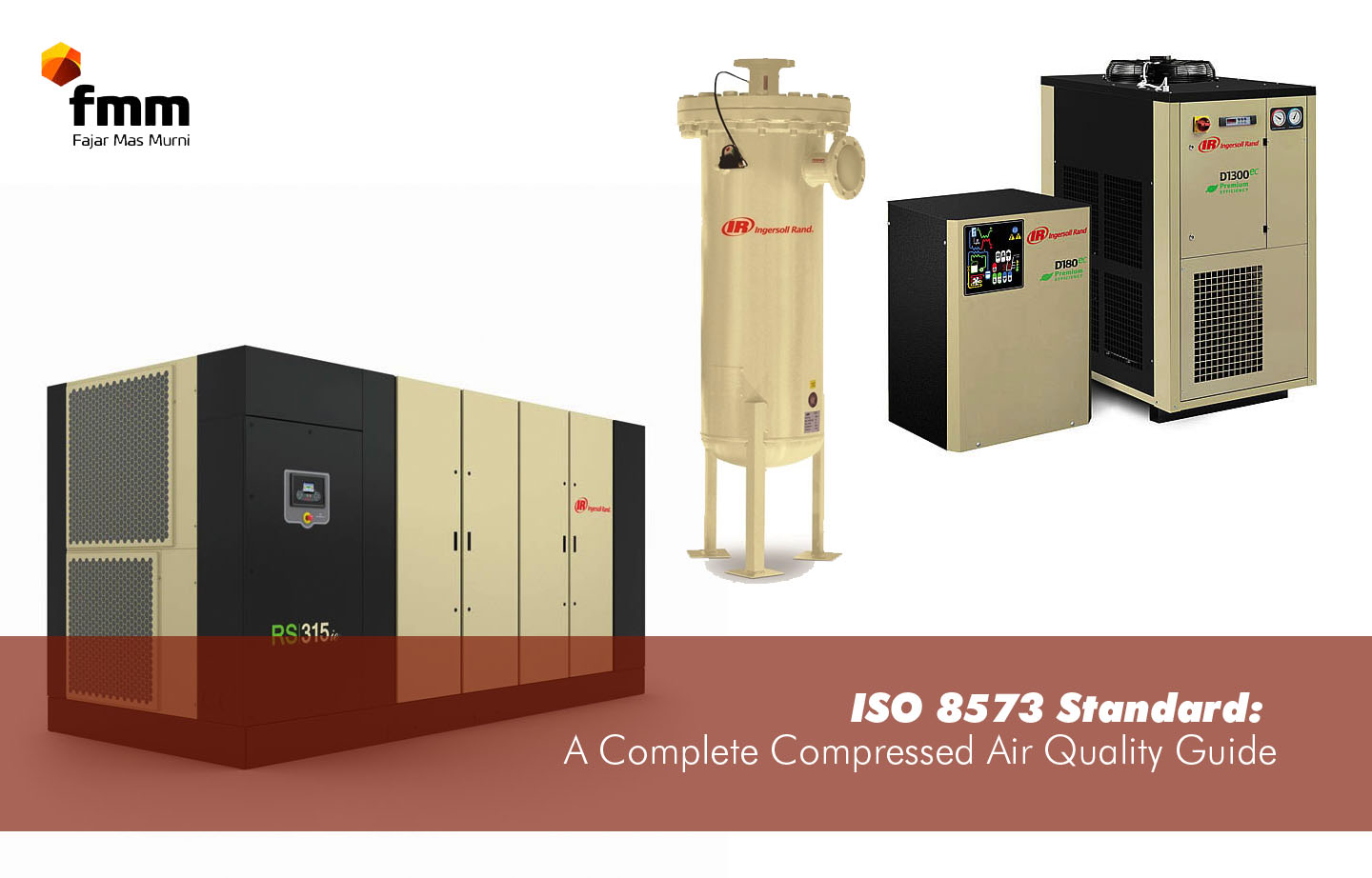
Kompresor udara sering disebut sebagai "utilitas keempat" di pabrik, setelah listrik, air, dan gas, karena hampir semua lini produksi bergantung padanya, mulai dari menggerakkan pneumatic tools hingga menjadi bagian langsung dari proses produksi. Namun tidak semua kompresor udara memiliki kualitas yang sama. Kontaminasi berupa partikel, air, dan oli yang terbawa dalam sistem dapat merusak peralatan, mencemari produk, hingga menyebabkan downtime yang mahal.
Untuk itulah standar kualitas kompresor udara ISO 8573 hadir sebagai acuan internasional yang digunakan hampir di seluruh dunia untuk menentukan tingkat kemurnian kompresor udara sesuai kebutuhan aplikasi.
Apa Itu ISO 8573?
ISO 8573 adalah rangkaian standar internasional yang mengatur klasifikasi kemurnian kompresor udara. Standar ini pertama kali diterbitkan pada 1991 dan direvisi pada 2010 menjadi ISO 8573-1:2010, yang hingga kini menjadi acuan paling umum dipakai industri. Seluruh rangkaian ISO 8573 terdiri dari sembilan bagian: ISO 8573-1 mendefinisikan kelas-kelas kemurnian udara, sementara bagian-bagian lainnya mengatur metode pengujian untuk partikel, air, oli, gas, hingga mikroorganisme.
Dengan adanya standar ini, produsen, kontraktor, dan pengguna akhir memiliki bahasa teknis yang sama untuk menentukan dan memverifikasi tingkat kebersihan kompresor udara yang dibutuhkan suatu proses.
Mengapa Kualitas kompresor udara Penting bagi Industri?
Kebutuhan kualitas kompresor udara berbeda-beda tergantung sektor. Industri makanan dan farmasi membutuhkan udara yang benar-benar bersih karena bersentuhan langsung dengan produk, sementara industri otomotif atau konstruksi lebih menitikberatkan pada keandalan dan umur pakai peralatan pneumatik. Ada dua alasan utama mengapa memahami klasifikasi ISO 8573 menjadi penting:
- Kepatuhan regulasi, sejumlah industri terikat secara hukum untuk memenuhi standar kualitas udara tertentu, dan ketidakpatuhan bisa berujung pada sanksi atau penghentian produksi.
- Efisiensi biaya, semakin tinggi tingkat kemurnian yang ditargetkan, semakin besar pula investasi dan konsumsi energi yang diperlukan. Menentukan kelas yang tepat (tidak berlebihan, tidak juga kurang) membantu menyeimbangkan kepatuhan, keandalan proses, dan efisiensi biaya.
Tiga Kategori Kontaminan dalam ISO 8573-1
ISO 8573-1 mengelompokkan kemurnian kompresor udara berdasarkan tiga jenis kontaminan, di mana semakin kecil angka kelasnya, semakin bersih udaranya.
Kelas Partikel (P)
Kelas ini mengukur jumlah dan ukuran partikel padat seperti debu, karat, atau serpihan pipa dalam setiap meter kubik kompresor udara.
- Kelas 1: ukuran partikel maksimum ?0,1 mikron dengan jumlah partikel sangat rendah, dipakai pada lingkungan sangat kritis seperti manufaktur semikonduktor, farmasi, dan aplikasi medis.
- Kelas 2–3: ukuran partikel hingga 1 mikron (kelas 2) atau 5 mikron (kelas 3), umum dipakai di industri makanan dan minuman, kimia, serta rekayasa presisi.
- Kelas 4–6: filtrasi minimal hingga tanpa filter sama sekali, dengan ukuran partikel yang ditoleransi semakin besar, umumnya tidak disarankan untuk pneumatic tools atau peralatan sensitif lain.
Kelas Kandungan Air (W)
Kelas ini ditentukan berdasarkan pressure dew point (PDP), yaitu suhu ketika uap air mulai mengembun pada tekanan tertentu. Semakin rendah nilai PDP, semakin kering udaranya.
- Kelas 1: PDP ? -70°C, untuk lingkungan ultra-kritis seperti semikonduktor, farmasi, dan elektronik presisi tinggi.
- Kelas 2–3: PDP antara -40°C hingga -20°C, umum untuk industri makanan-minuman, kimia, dan aplikasi medis.
- Kelas 4–5: PDP antara +3°C hingga +7°C, cukup untuk kebutuhan industri umum seperti otomotif, fabrikasi logam, dan pengemasan.
Kelas Kandungan Oli (O)
Kelas ini mencakup kandungan oli baik dalam bentuk aerosol maupun uap, yang bisa berasal dari kompresor bertipe oil-lubricated maupun lingkungan sekitar.
- Kelas 0: tingkat kemurnian tertinggi, ditentukan secara khusus oleh pengguna atau produsen peralatan karena lebih ketat dari kelas 1, umumnya dicapai melalui kompresor oil-free.
- Kelas 1: maksimum 0,01 mg/m³, dibutuhkan industri makanan, minuman, dan layanan kesehatan.
- Kelas 2–3: hingga 0,1 mg/m³, umum dipakai pada proses industri secara umum.
- Kelas 4–5: hingga 1 mg/m³ dan 5 mg/m³, cukup untuk aplikasi pneumatik yang tidak terlalu ketat persyaratannya.
Cara Membaca Notasi Kelas ISO 8573-1
Kualitas kompresor udara menurut ISO 8573-1 ditulis dalam format tiga angka yang dipisahkan titik dua, mengikuti urutan [Partikel : Air : Oli]. Sebagai contoh, notasi ISO 8573-1:2010 [1:2:1] berarti:
- Kelas 1 untuk partikel
- Kelas 2 untuk kandungan air (PDP sekitar -40°C)
- Kelas 1 untuk kandungan oli (?0,01 mg/m³)
Format ini menghindari kesalahpahaman antara pemasok, operator, dan auditor, karena persyaratan kualitas udara bisa dinyatakan secara ringkas namun presisi.
Standar ISO 8573 di Berbagai Sektor Industri
Setiap sektor industri umumnya memiliki target kelas ISO 8573 yang berbeda, disesuaikan dengan tingkat sensitivitas proses terhadap kontaminasi:
|
Sektor Industri |
Target Kelas ISO 8573-1 (P:W:O) |
Alasan |
|
Makanan & Minuman |
1:2:1 |
Kontak langsung dengan produk konsumsi |
|
Farmasi |
1:2:1 |
Proses kritis yang rentan kontaminasi |
|
Tekstil |
4:4:3 |
Cukup andal untuk mesin tanpa risiko kontaminasi produk tinggi |
|
Peralatan Pneumatik Industri Umum |
3:4:4 |
Menjaga keandalan alat tanpa biaya berlebih |
Perlu diingat bahwa angka di atas adalah gambaran umum; kebutuhan aktual tetap bergantung pada proses spesifik, kondisi iklim, dan jenis kompresor yang digunakan.
Cara Mencapai Standar ISO 8573 pada Sistem kompresor udara Anda
Setelah mengetahui kelas ISO 8573 yang dibutuhkan, langkah berikutnya adalah memilih kombinasi filter dan dryer yang tepat:
- Filter partikulat menyaring debu dan kotoran padat untuk memenuhi kelas partikel (P).
- Filter coalescing menangkap aerosol oli dan air sekaligus partikel, membantu memenuhi kelas oli (O) dan partikel sekaligus.
- Filter karbon aktif menghilangkan uap oli dan bau, dibutuhkan saat udara harus sangat murni, misalnya di industri makanan atau farmasi.
- Air dryer menurunkan kelembaban untuk memenuhi kelas air (W), dryer refrigerant cocok untuk kebutuhan industri umum, sementara dryer desiccant mampu menghasilkan udara yang jauh lebih kering untuk aplikasi kritis atau lingkungan bersuhu rendah.
Kombinasi kompresor, filter, dan dryer yang tepat, seperti lini compressed air treatment dari Ingersoll Rand, memastikan sistem kompresor udara Anda konsisten memenuhi kelas ISO 8573 yang ditargetkan, tanpa membebani biaya energi secara berlebihan.
Kesimpulan
Standar kualitas kompresor udara ISO 8573 memberi panduan yang jelas dan terukur untuk menentukan tingkat kemurnian udara sesuai kebutuhan proses, sekaligus membantu perusahaan menghindari investasi filtrasi yang berlebihan maupun kurang memadai. Memahami tiga kategori kontaminannya, partikel, air, dan oli, adalah langkah awal sebelum menentukan spesifikasi kompresor, filter, dan dryer yang tepat.
Sebagai distributor resmi Ingersoll Rand di Indonesia, FMM siap membantu Anda mengaudit kebutuhan kualitas kompresor udara serta merekomendasikan konfigurasi kompresor, filter, dan dryer yang sesuai dengan kelas ISO 8573 yang dipersyaratkan industri Anda.

Administrator System
